|
 |
|||||||
 |
 |
 |
||||||
 |
 |
 |
 |
 |
||||
| |
 |
 |
 |
 |
 |
 |
|
|
 |
||||||||
This puzzle was created before SET turned their members-only newsletter into Imagine magazine. It was part of a set of puzzles which I handed over to my editor on a visit to Baltimore. At the time, I was taking a tour of the east coast, checking out colleges during the summer before my senior year at Western Reserve Academy. Many of the puzzles I first gave the magazine had been created over a multi-year period going all the way back to my days in elementary school and junior high.
It is difficult to tell exactly when this puzzle was created, but the date can be narrowed down a bit. It was created before the summer of my visit to Johns Hopkins University, which was in 1993, but after the publication of the book which inspired the idea. Mad Mazes by Robert Abbott, published in 1990, is a marvelous book of puzzles, many of them quite challenging, and some have inspired me to make similar creations. Abbott's "Mad Maze 6" entitled "No Left Turns! / No Right Turns!" provide the rules for this puzzle, although his puzzle is much more refined than my instantiation.
I remember when creating this puzzle, the upper portion of the puzzle started out very small, and then grew through many alterations and variations. Unfortunately, since I would draw and erase, draw and erase, those variations are gone, and only the final product remains. Most of the bottom portion of the puzzle was essentially tacked on after the top had been completed, and the piecewise nature is one of the most disappointing aspects of the puzzle.
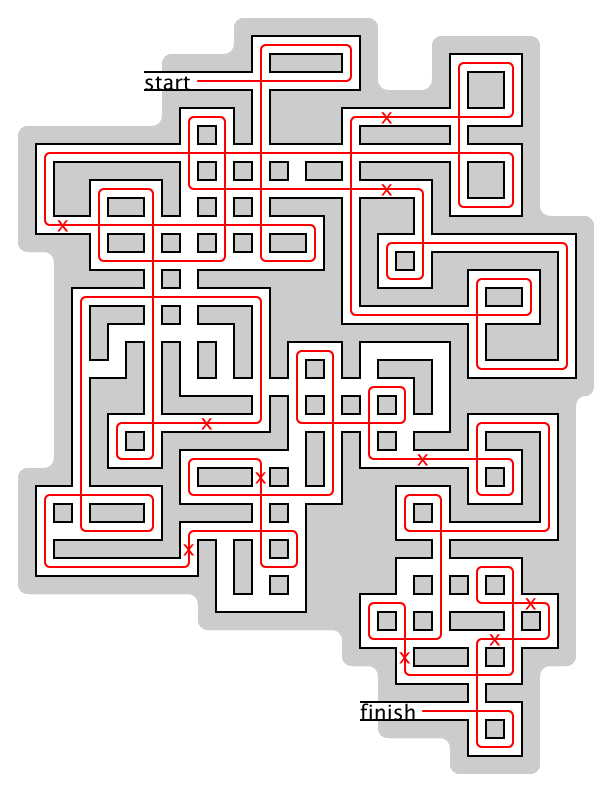
In addition, the original solution was flawed. The simpler solution was published in the magazine (it was the solution they came up with), but the original, intended solution is presented here. Notice that the only substantial change is with the upper portion. By passing through the X's in a different order, all those corridors become necessary.