|
 |
|||||||
 |
 |
 |
||||||
 |
 |
 |
 |
 |
||||
| |
 |
 |
 |
 |
 |
 |
|
|
 |
||||||||
If there is only one lesson that I can give to young puzzle makers, it would be this: Don't force things. Let your puzzles come naturally. If an idea doesn't work right away, set it aside and come back to it later. I have piles of puzzles and half-finished musings that never worked. Puzzles that you would laugh at they're so bad. But all of those constructions have eventually led to some great work (well, at least I think it's pretty good stuff).
This puzzle is a good example of what happens when I don't follow my best piece of advice. In celebration of Imagine's fifth issue in it's fifth volume, I decided that it would be a good idea to make a puzzle that revolved around the number 5. I was running out of time to submit a new puzzle, for it was already late in the spring of 1998, and I needed to make this idea work in a short amount of time. I decided, for lack of a better idea, to recycle an idea that has been done many times before, from two incarnations in Mad Mazes by Robert Abbott (Puzzle 7 - "Jumping Jim" and Puzzle 15 - "Jumping Jim's Encore") to a puzzle printed in Imagine Volume 2 - Number 2 by Tenie Remmel.
While designing the puzzle, I kept track of all the dead ends and loops created in the problem space. After I complete a puzzle, I usually, in a totally separate process, check the problem space for any extraneous solutions I might have missed. But to save some time, I skipped this step, trusting that I had paid close attention to all the possible moves. I submitted the puzzle just before deadline, and the magazine rushed it onto the back cover, without passing it by me for my usual final inspection.
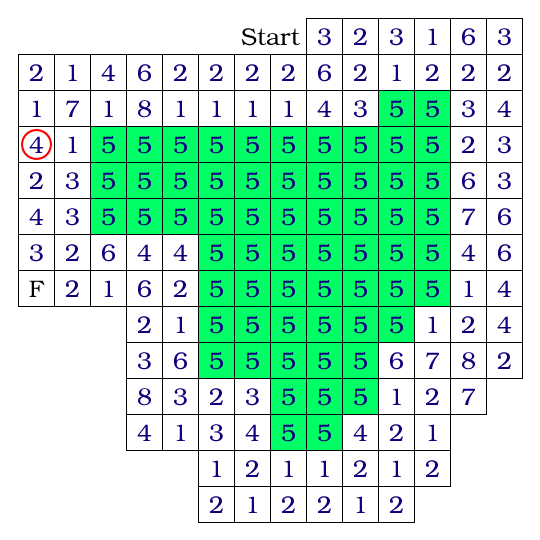
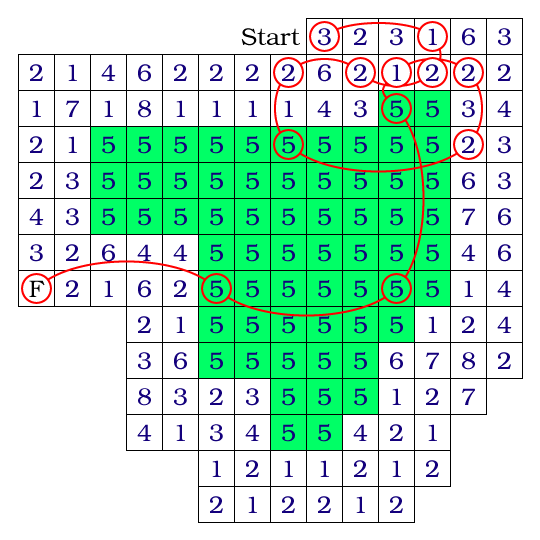
Both cases of cutting corners led to boatloads of trouble. The magazine made a transcription error, and changed one of the numbers in the puzzle. As printed below, the third square in the leftmost column should be a 4 instead of a 2:
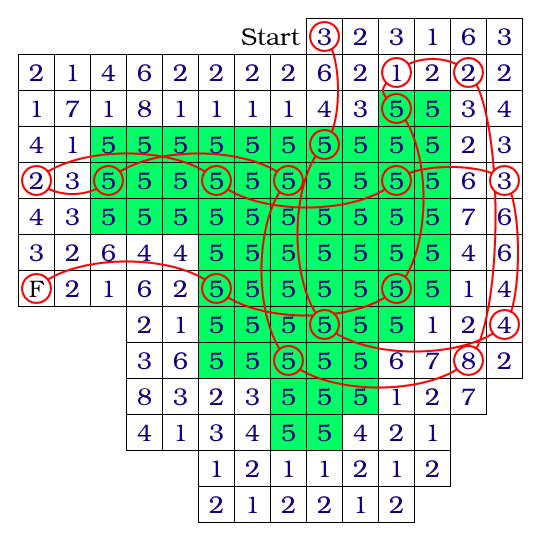
The original soultion did not actually use that 4 square, but I'll print it here for comparison:
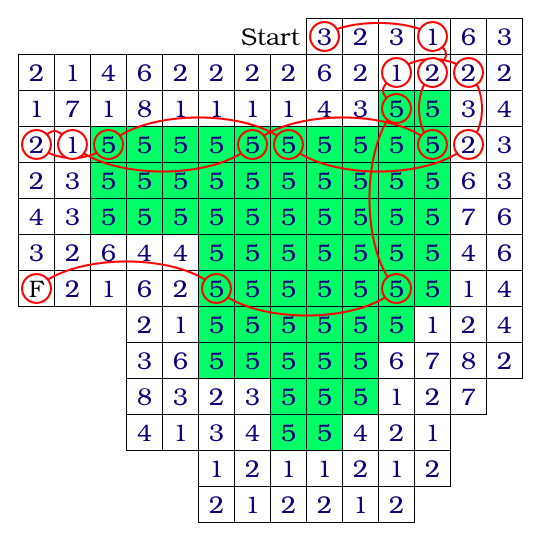
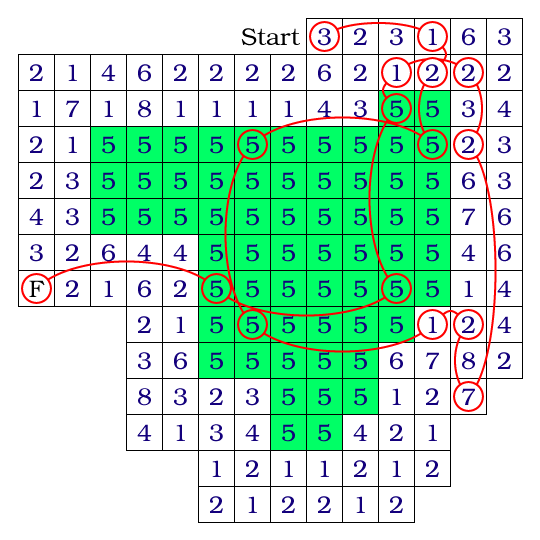
The 2 allowed for an alternate solution: