|
 |
|||||||
 |
 |
 |
||||||
 |
 |
 |
 |
 |
||||
| |
 |
 |
 |
 |
 |
 |
|
|
 |
||||||||
| |
|
|||||||
| |
|
|
||||||
| |
|
|
|
|
||||
| |
|
|
|
|
|
|
|
|
| |
||||||||
Solution:

Detailed Solution:
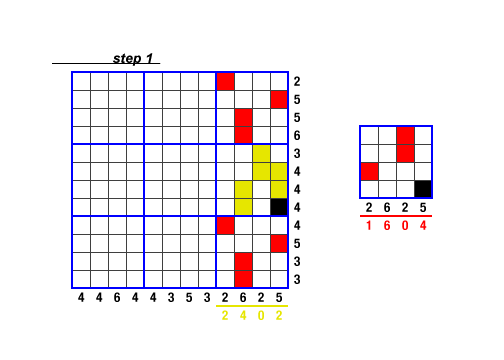
Beginning with the shaded hint square, both Stamp 1 and 4 have an orientation that would cover the hint square. However, trying Stamp 1 yields an unacceptable combination of squares that still need to be shaded in the right vertical tier of blocks. Thus Stamp 4 must be used in the middle block, which leaves one orientation of Stamp 1 for the remaining blocks of the right vertical tier.
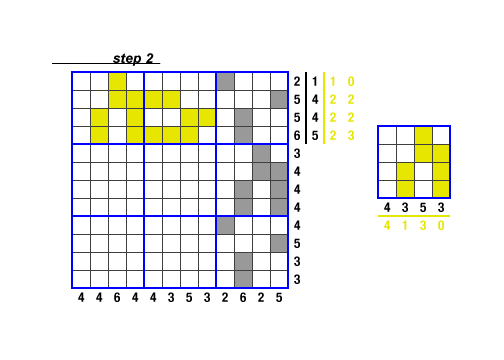
Working across the top tier of blocks, the top row of squares only needs one more shaded square, after subtracting off the one other square shaded with Stamp 1. This means that one of the two blocks will have an empty top row, and the only Stamp with an outer empty row is Stamp 4. Subtracting this from the top tier, the position of a second Stamp 4 for the other block is revealed. If the second Stamp 4 were to go in the middle block, then the right column of squares in the middle vertical tier could not have any more shaded squares. This means that two copies of Stamp 4 would have to be used, but the shaded squares in such a scenario do not sum to what is available. Thus, the Stamp 4 orientation with an empty top row is in the middle block.
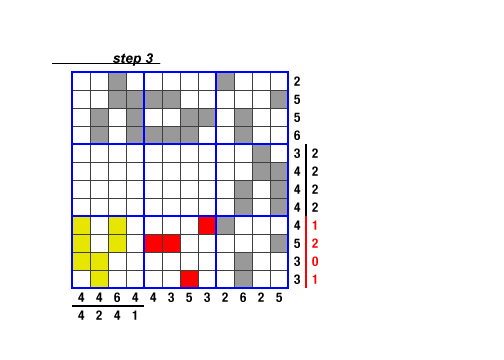
Subtracting the shaded squares of Stamp 4 from the left vertical tier, there remains only one shaded square needed for the right column. This means that one stamp of the two remaining blocks will have to leave that column empty, and the only stamp with that characteristic is Stamp 4. Since the middle horizontal tier of blocks does not have enough room to accommodate a copy of Stamp 4, it must go in the bottom left corner. This leaves room for a specific orientation of Stamp 1 in the middle block of the bottom horizontal tier.
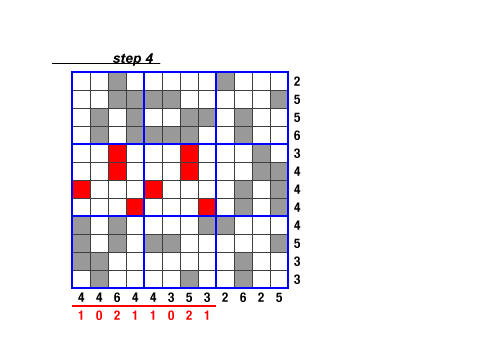
Working vertically, two copies of Stamp 1, both in the same orientation, will fit in the last remaining blocks.
Last updated: May 26, 2003
Copyright © 2000-2003 All Rights Reserved